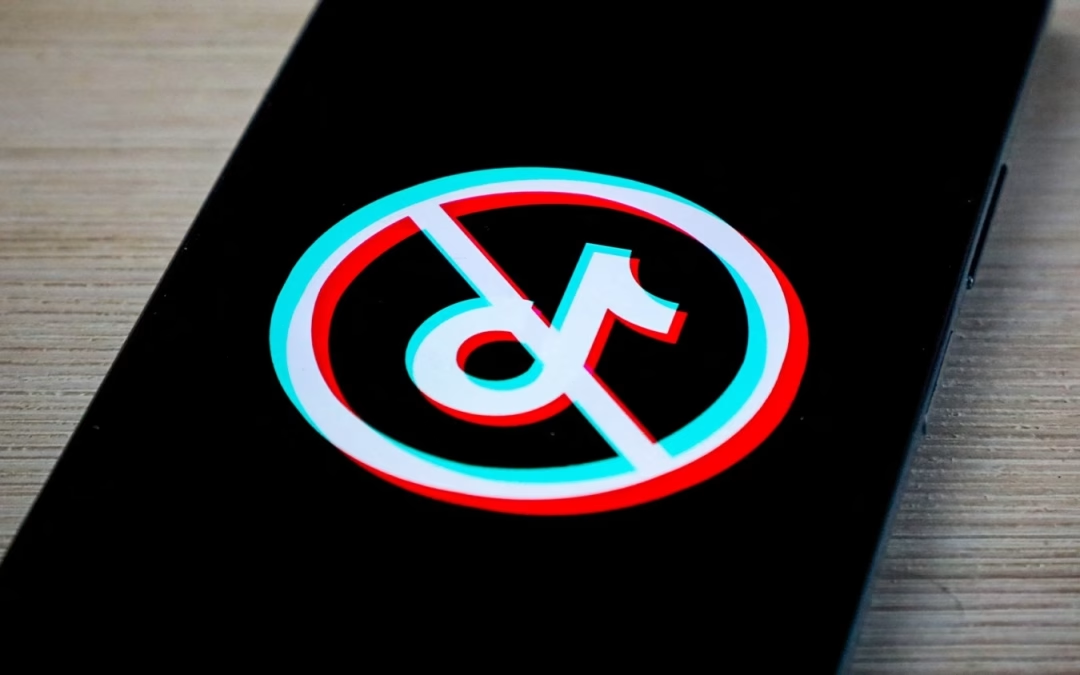
For millions of small business owners, the TikTok ban isn’t just a headline — it’s a direct threat to how they reach customers, drive sales, and grow their brand. With over one billion active users worldwide, TikTok has become one of the most powerful and affordable marketing platforms available to small businesses. However, government restrictions and potential bans in certain regions have created real uncertainty — and that uncertainty demands a real strategy.
In this post, we’ll break down exactly what the TikTok ban means for small business owners, how it could impact your marketing, and the specific steps you can take right now to protect your brand — no matter what happens to the platform.
| ⚠️ Don’t wait for a ban to force you into action. The businesses that will come out ahead are the ones building diversified strategies right now — before it becomes urgent. |
Why TikTok Has Been So Important for Small Business Marketing
To understand why a TikTok ban is such a significant issue, it helps to first understand what the platform has meant for small business owners over the past few years. TikTok revolutionized social media marketing by prioritizing short, engaging, and highly shareable video content in a way that no other platform had done before.
For small businesses in particular, TikTok has offered something rare: a genuine chance to go viral without a massive budget or a large following. The platform’s algorithm doesn’t heavily favor accounts with more followers the way Instagram and YouTube historically have. As a result, a small business with 200 followers has had the same chance of reaching a million people as a brand with 200,000.
Specifically, TikTok has helped small businesses:
- Build brand awareness through content that spreads organically
- Connect with younger audiences — particularly Gen Z and Millennials — who are notoriously difficult to reach through traditional advertising
- Showcase products and services in a creative, authentic, and low-cost way
- Drive website traffic and sales through TikTok Shopping and bio links
In other words, TikTok has functioned as a powerful equalizer — giving small businesses access to massive audiences that would have been impossible or prohibitively expensive to reach through paid advertising alone.
What the TikTok Ban Actually Means for Small Business Owners
The term ‘TikTok ban’ refers to government restrictions that could limit or eliminate access to the platform in certain regions. These restrictions are typically driven by concerns over data privacy, national security, and the handling of user information. Depending on the country and the scope of the ban, restrictions could be partial — limiting certain features — or complete, blocking the app entirely.
For small businesses that have built their marketing around TikTok, a ban would create a range of very real challenges. Here’s what to expect across each area:
1. Reduced Visibility and Organic Reach
TikTok’s unique algorithm has given small businesses the chance to gain exposure far beyond their typical reach. If the platform becomes unavailable, that visibility disappears overnight — and rebuilding the same level of organic reach on another platform takes time. Furthermore, every follower you’ve built on TikTok stays on TikTok. You can’t export them. They don’t automatically follow you anywhere else.
2. Loss of a Direct Sales Channel
TikTok Shopping and in-app product links have become genuinely valuable revenue channels for many small businesses. Consequently, a ban wouldn’t just affect visibility — it would directly cut off a conversion pathway that some businesses have built significant revenue around. This is why having multiple sales channels is not optional — it’s essential.
3. Increased Competition on Alternative Platforms
If TikTok is banned, millions of businesses will migrate to Instagram Reels, YouTube Shorts, and other short-form video platforms simultaneously. As a result, competition for attention and advertising space on those platforms will increase significantly — and so will advertising costs. The businesses that establish themselves on those platforms now, before the migration, will have a meaningful head start.
4. Disrupted Community and Customer Relationships
Many small businesses have used TikTok not just to broadcast content, but to build genuine communities around their brand. A ban would interrupt those connections and make it harder to maintain the kind of ongoing customer engagement that drives loyalty and repeat business. That said, any community you’ve built on TikTok is a signal — it tells you what your audience responds to, and that insight travels with you to every other platform.
How to Adapt Your Marketing Strategy Right Now
The good news is that a TikTok ban — whether it happens or not — is actually a useful forcing function. It highlights a vulnerability that every business relying heavily on any single platform should address: over-dependence on rented land. Here’s exactly what to do:
1. Diversify Across Multiple Platforms
First and most importantly, stop putting all your content into a single platform. Start repurposing your TikTok videos for Instagram Reels, YouTube Shorts, and Pinterest Idea Pins. Most of the content you’ve already created can be adapted with minimal additional effort. Additionally, diversifying now — before any ban takes effect — means you’ll have an established presence on other platforms if and when TikTok becomes unavailable.
2. Build Your Email List — Starting Today
This is the single most important thing you can do. Unlike social media followers, your email list is an audience you own. No platform can take it from you. No algorithm can suppress it. No ban can eliminate it. If you don’t have an email list yet, start building one today — even a small, engaged list of a few hundred subscribers is more valuable than thousands of social media followers you don’t have a direct line to.
3. Invest in Other Social Platforms Now
Rather than waiting for a ban to force the move, start establishing your presence on alternative platforms today. Instagram and Facebook remain dominant for Millennials and older audiences. YouTube Shorts gives you access to YouTube’s enormous search-driven audience. Pinterest drives consistent long-term traffic, particularly for product-based businesses. The platform you choose should align with where your ideal customer actually spends their time.
4. Strengthen Your Website and SEO Strategy
Your website is the one digital asset you fully own and control — and SEO is the marketing channel that works for you 24 hours a day, even when you’re not posting. Therefore, now is the time to invest in your blog, optimize your existing content for search, and build the kind of organic traffic that no social media platform change can take away. A well-optimized website is the foundation every marketing strategy should be built on.
5. Consider Paid Advertising as a Bridge
If your organic reach declines as a result of a TikTok ban, paid advertising on platforms like Google, Meta, and Pinterest can help you maintain visibility while you rebuild your organic presence. However, as we’ve discussed in other posts, advertising works best when your marketing foundation is already solid. Use it as an amplifier — not a replacement for the strategy work underneath it.
TikTok Alternatives: Platform Comparison for Small Businesses
If TikTok becomes unavailable, here’s a clear comparison of the strongest alternative platforms — so you can choose the right one for your business based on your audience and content style:
| Platform | Best For | Key Advantage |
| Instagram Reels | Visual brands, lifestyle, B2C | Largest short-form video audience after TikTok |
| YouTube Shorts | Educational content, tutorials, how-tos | Backed by YouTube’s search engine — long-term traffic |
| Pinterest Idea Pins | Product-based, DIY, food, fashion, décor | Strong evergreen discovery — pins drive traffic for months |
| B2B, professional services, thought leaders | Best platform for authority and high-value client acquisition | |
| Facebook Reels | Older Millennial and Gen X audiences | Largest overall social platform — strong paid ad ecosystem |
| 💡 The platform isn’t the brand. You are. Your content, your voice, and your community can move with you — but only if you’ve built them on more than one place. |
The Real Lesson the TikTok Ban Teaches Every Small Business
Ultimately, the TikTok ban conversation is really a conversation about a much bigger principle: you should never build your business on land you don’t own. Social media platforms — all of them — are rented space. The algorithms change, the platforms evolve, governments intervene, and user behavior shifts. Any of these things can dramatically reduce your reach or eliminate your presence overnight.
The businesses that survive and thrive through platform changes are the ones that have built their audience across multiple touchpoints — a strong website, an email list, consistent SEO, and a presence on more than one social platform. In other words, they’ve built a brand that doesn’t depend on any single channel.
To summarize: start diversifying now. Build your email list. Strengthen your SEO. Repurpose your content. And treat every platform as a way to drive your audience toward the assets you own — your website and your email list — rather than as an end in itself.ith me here on LinkedIn or visit Annulysse Branding.
| WORRIED ABOUT LOSING YOUR AUDIENCE? Let’s Build a Marketing Strategy That No Algorithm Can Take Away At Annulysse Branding we help small business owners build multi-platform brand strategies, grow their email lists, and create content systems that work across every platform — so no ban, algorithm change, or platform shift can stop your growth. ✅ Multi-platform content strategy ✅ Email list building that you own forever ✅ Brand strategy built to outlast any platform → Let’s Talk at annulyssebranding.com Because your audience should never live on a platform you don’t control. |
A TikTok ban would mean small businesses lose access to one of their most effective organic marketing platforms. This includes loss of visibility, reduced engagement with younger audiences, and the potential loss of sales channels like TikTok Shopping. The impact depends on how reliant your business is on TikTok and whether you have alternative channels already in place.
The most important steps are to diversify your content across multiple platforms (Instagram Reels, YouTube Shorts, Pinterest), build your email list, and invest in SEO so your website drives organic traffic. These strategies reduce your dependence on any single platform and create a more resilient marketing foundation.
The strongest alternatives are Instagram Reels for visual and lifestyle brands, YouTube Shorts for educational and tutorial content, Pinterest for product-based businesses, and LinkedIn for B2B or professional service providers. The right platform depends on your audience and the type of content you create.
Not automatically — your TikTok followers don’t transfer to other platforms. However, you can encourage your TikTok audience to follow you elsewhere by actively promoting your other channels in your content and bio before any ban takes effect. The earlier you start this, the more of your audience you’ll be able to retain.
The most important thing you can do is build an email list. Unlike social media followers, email subscribers are an audience you own — no platform can take them away. Pair that with a strong SEO strategy for your website, and you’ll have two owned channels that are completely independent of any social media platform’s policies or algorithm changes.